⚖️ Legal Status at a Glance — Vlorë, Albania
Overview
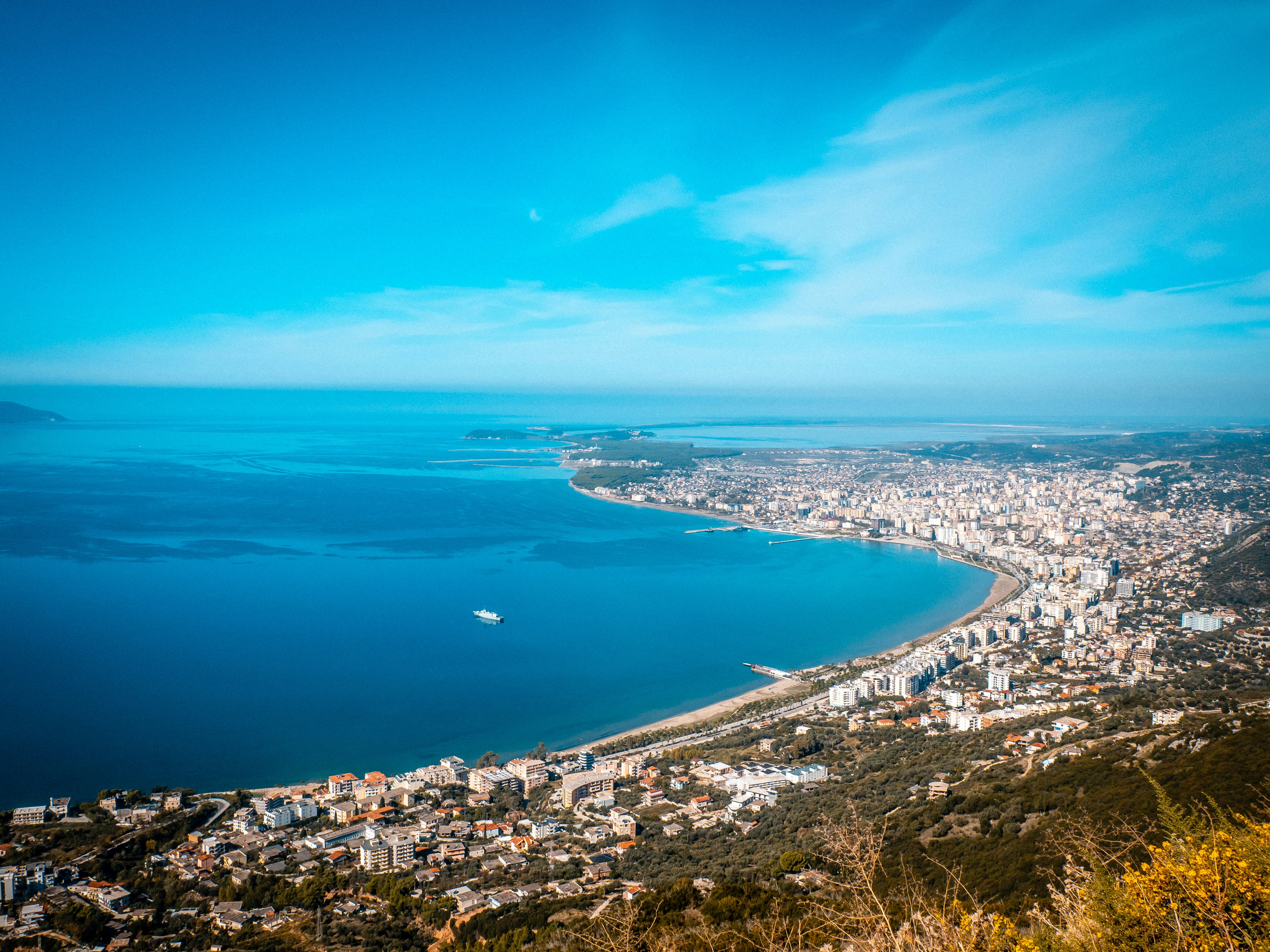
Vlorë is Albania's third-largest city, positioned where the Adriatic meets the Ionian Sea and serving as the main gateway to the Albanian Riviera. A working ferry route to Brindisi, Italy, a growing tourism economy, and a historic centre draw a mix of Albanian holidaymakers, Western European visitors, and ferry transit passengers crossing the Otranto Strait.
What defines Vlorë's cannabis picture is its history as Europe's most active cannabis trafficking corridor: from the early 1990s, speedboats out of the Vlorë coastline moved Albanian-grown cannabis across the 80-kilometre Otranto Channel to Italy at industrial scale, a trade Europol and UNODC have documented exhaustively. That history still shapes enforcement — resources concentrate on dismantling supply networks, not chasing consumers. Cannabis is fully illegal in Albania; there is no decriminalisation, no tolerance policy, and no exemption for tourists. That leniency does not apply at the ferry terminal, monitored by both Albanian and Italian authorities.
The Law Right Now
Law No. 116/2016 and Article 283 of the Albanian Criminal Code govern cannabis. All forms are Schedule I narcotics. Possession, cultivation, production, transport, import, export, and supply are all criminalised, with no exemptions for tourists.
Personal possession can be treated as an administrative offence under Article 28 of Law 116/2016 — a fine plus mandatory treatment referral — but prosecutors retain full discretion to pursue criminal charges. Tourists caught with small amounts rarely face criminal prosecution inside the city; more typically an administrative process, a warning, or an informal demand. That is operational reality, not a legal right, and it does not hold at the port.
Trafficking (Article 283): base sentence 5–10 years; aggravated (organised crime, large quantities, cross-border) carries 10–20 years. Do not carry cannabis through Vlorë's ferry terminal. Border = import/export = trafficking regardless of quantity; the buyer-vs-seller asymmetry that softens enforcement inside the city evaporates entirely at the port gate.
Medical cannabis: Law No. 61/2023 authorises licensed export cultivation only — no domestic patient access, no dispensary system. Cannabis-derived prescription medication requires a formal import permit from the Albanian Ministry of Health obtained before travel; arriving with it undeclared is a real risk at the checkpoint.
Realistic Consequences
Recent cases show what the buyer/seller split above looks like on the ground. In July 2026 police closed Operation "WEST," arresting five people — three Albanians and two Italian nationals — after tracing a ring selling cannabis and other narcotics at beach clubs and nightlife venues around Zvërnec and the Uji i Ftohtë neighbourhood, seizing roughly 700 individual doses. Three weeks later, a patrol in Dukat village caught a 33-year-old red-handed tending 135 cannabis plants; the crop was destroyed and the case referred to court. On 1 August 2026 an "Siguria" operation on the Lungomare waterfront promenade ended with one arrest over a few grams of cannabis found alongside a pistol and cocaine.
The pattern holds across all three: cultivation plots and dealing networks get raided and prosecuted, while a tourist holding a personal amount is far more likely to face confiscation and paperwork than a courtroom. That gap is operational, not a legal guarantee, and it narrows fast if a foreign name turns up in a supply-side case — as it did in "WEST."
📡 Regulation Pulse
- Operation "WEST" (July 2026): five arrested, including two Italian nationals, over a cannabis/narcotics distribution ring tied to Zvërnec and Uji i Ftohtë — signals continued police focus on beach-adjacent dealing networks.
- Dukat cultivation bust (August 2026): 135-plant cannabis grow seized on a private plot outside the city and destroyed on site.
- EU accession negotiations ongoing (formal talks opened 2022); European Commission monitoring rule-of-law and drug enforcement under Chapters 23/24 — external pressure on enforcement accountability, no change to the substance of cannabis law.
- Law No. 61/2023 medical cannabis export framework: licensed cultivation facilities becoming operational; no domestic patient access programme planned — unrelated to the legal situation of visitors.
Public Sentiment
There is no meaningful domestic constituency pushing for cannabis liberalisation; EU accession and rule-of-law reform dominate civil society attention instead. Public discourse is shaped by Albania's history as a producer and exporter — coverage centres on organised crime and trafficking, not consumer rights.
Practical Advice for Visitors
Do not carry cannabis through Vlorë's ferry terminal. The Otranto crossing to Brindisi is actively monitored by both Albanian and Italian authorities; carrying any quantity across it is import/export, classified as trafficking, minimum 5 years.
Within the city, enforcement falls heavily on sellers and cultivators — not tourists, as the Zvërnec and Dukat cases show. A personal amount is a very different practical outcome than being a seller or grower — but that asymmetry is operational, not legal, and it does not soften once a foreigner is named in a supply-side case.
Attempting to buy locally carries seller-side exposure. Anyone selling to you in Vlorë faces 3–20 years under Article 283. Seeking a street purchase, including at beach clubs or nightlife venues, puts you in contact with people under active police attention.
CBD and hemp-derived products occupy a legal grey zone. Albanian law does not clearly distinguish low-THC hemp products from cannabis. Border officers without specialist testing equipment may treat a CBD supplement as a controlled substance. Leave such products at home unless you have explicit written authorisation from Albanian authorities.
If detained: invoke your right to consular notification immediately under the Vienna Convention on Consular Relations. Do not sign documents you have not fully understood. Informal payments to resolve minor situations, while reported, expose you to further extortion and provide no legal resolution. Seek formal legal representation as early as possible.
Comments
Leave a Comment