⚖️ Legal Status at a Glance — Cancún, Mexico
Overview
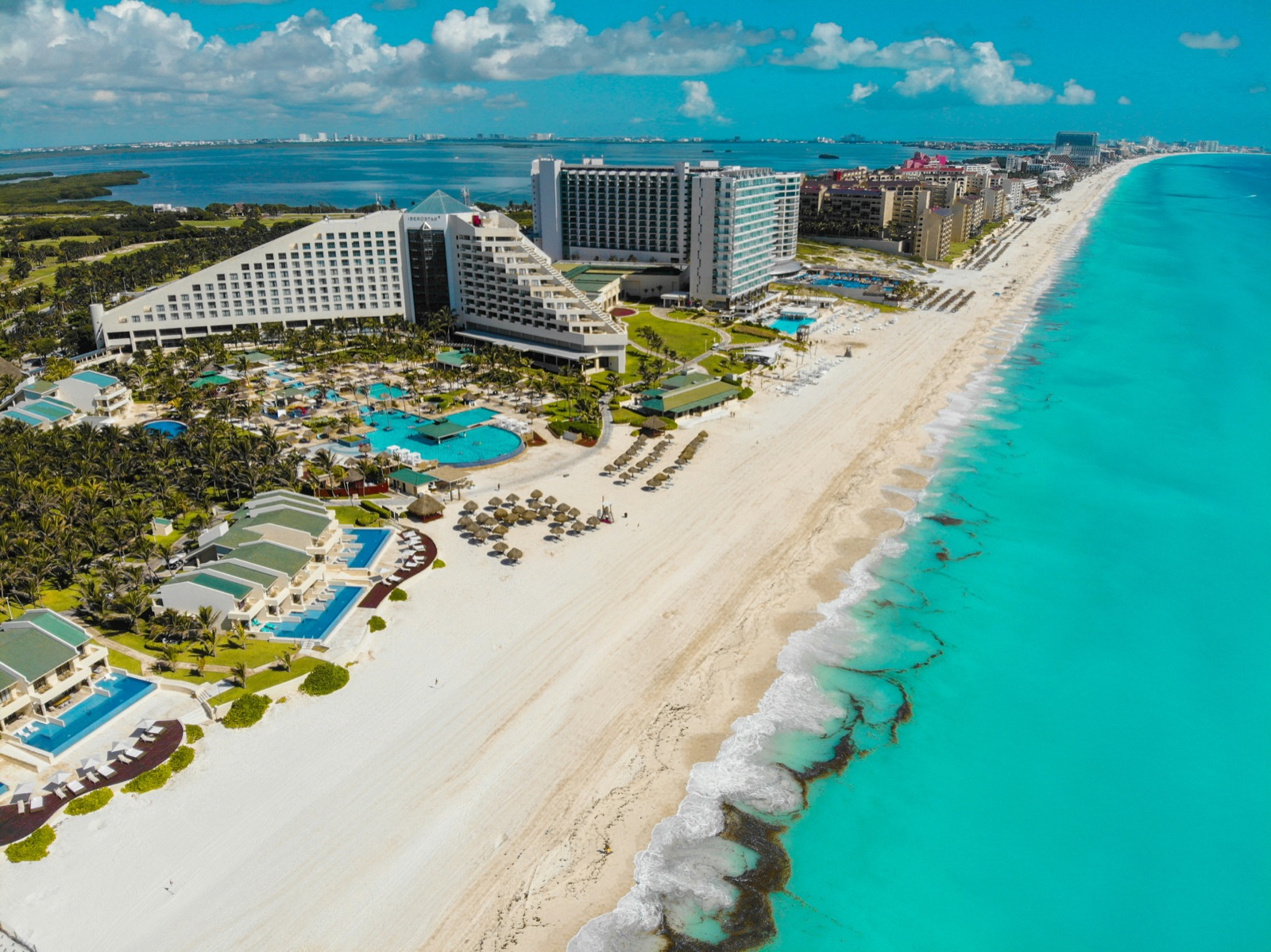
Cancún and the Riviera Maya — Playa del Carmen, Tulum and Cozumel — draw a constant stream of US and Canadian holidaymakers through Cancún International Airport (CUN) and cruise passengers through Cozumel. Many arrive believing Mexico "legalised weed". It did not.
The single most important thing to know: there is no legal way for a tourist to buy cannabis anywhere in Mexico. The Supreme Court ended the absolute ban on personal use in 2021, but Congress never created a market. Every joint offered on a Hotel Zone beach or at a Tulum beach club comes from a street trade criminal groups fight over — and the everyday risk is police who treat a tourist with a bag as an opportunity.
The Law Right Now
Cannabis offences fall under the Ley General de Salud (General Health Law). The table in Article 479 sets 5 grams as the limit for personal use; under Article 478, the prosecutor does not charge a user carrying no more than that. Above 5 grams, Article 477 punishes simple possession with 10 months to 3 years in prison; if circumstances suggest sale, Article 476 applies: 3 to 6 years. A May 2022 Supreme Court ruling against the 5-gram ceiling bound only that appellant — police still work to 5 grams.
On 28 June 2021 the Supreme Court (SCJN) issued a declaratoria general de inconstitucionalidad (8 votes to 3) against the ban on recreational self-consumption. Its effect is narrow: COFEPRIS, the federal health regulator, can now grant individual permits to grow, possess and use. It created no right to buy or sell, and tourists have no permit.
Smoking in the street, on the beach or in parks is a municipal administrative offence in Cancún, punishable by a fine or arrest of up to 36 hours. Taking cannabis out of the country can be charged under Article 194 of the Federal Penal Code: 10 to 25 years. Since 16 January 2026, selling or importing any vape — THC cartridges included — carries 1 to 8 years. Medical cannabis has been legal since 2017, through COFEPRIS-approved products only.
Realistic Consequences
A tourist caught with a gram or two in the Hotel Zone will usually have it confiscated. The law says they should then be released, but officers can take them before the Ministerio Público (prosecutor) to verify the amount — and that threat is the leverage behind on-the-spot "fines". In July 2026 prosecutors charged three Cancún tourist police officers with extortion after they falsely accused a foreign couple in the Hotel Zone of public urination and demanded about US$1,400 to avoid arrest.
More than 5 grams, several small bags, cash or a scale turns the case into a federal criminal one, and Quintana Roo prosecutors routinely seek pre-trial detention for dealing. Airports are zero-tolerance: National Guard dog teams search luggage at CUN, and any amount found there is treated as contraband.
📡 Regulation Pulse
- 16 January 2026: nationwide ban on selling and importing vapes takes effect (1–8 years for the supply chain; personal use not sanctioned).
- April and 24 September 2026: Riviera Maya prosecutors arrest and jail suspected street dealers in Playa del Carmen and Tulum.
- 10 September 2026: the SCJN rules permit holders may cook cannabis into food for their own use; sale and supply stay prohibited.
- September 2026: President Claudia Sheinbaum says the government opposes criminalising young users but puts public health first; no federal cannabis bill is moving in Congress.
Public Sentiment
Mexican opinion is split and depends on the question: an El Financiero poll of July 2020 found 58% opposed legalisation; a UVM online panel of July–August 2021 found 70% in favour. In Quintana Roo, security dominates the debate — the retail drug trade behind tourist sales drives gun violence in Playa del Carmen and Tulum, which the US State Department flags in its Level 2 advisory for the state.
Practical Advice for Visitors
Do not smoke on the beach or in the street. Public use means a fine or up to 36 hours' arrest, and it is how most tourists end up talking to police.
Do not buy from beach-club dealers, taxi drivers or Quinta Avenida touts. They are the bottom of a contested criminal market; prosecutors tied a fatal January 2026 shooting at a Tulum venue to a narcomenudeo dispute.
Never hand cash to an officer. Ask for the written infraction and the officer's badge number, and pay any fine at the municipal office. Report extortion to the Quintana Roo prosecutor (FGE) or your consulate.
Do not carry cannabis, vapes or edibles through Cancún airport or any cruise port. Leaving Mexico with narcotics can be charged as export — 10 to 25 years.
Do not fly anything home. At US customs recreational marijuana is still federally illegal: up to 1 year in prison and a minimum $1,000 fine, and non-citizens risk refused entry. Carrying cannabis into Canada is also a criminal offence.
Do not treat CBD or cannabis-leaf shops as dispensaries. No one in Mexico holds a recreational sales licence.
Related guides: Mexico City · New York · Toronto
Comments
Leave a Comment