⚖️ Legal Status at a Glance — Marrakech, Morocco
Overview
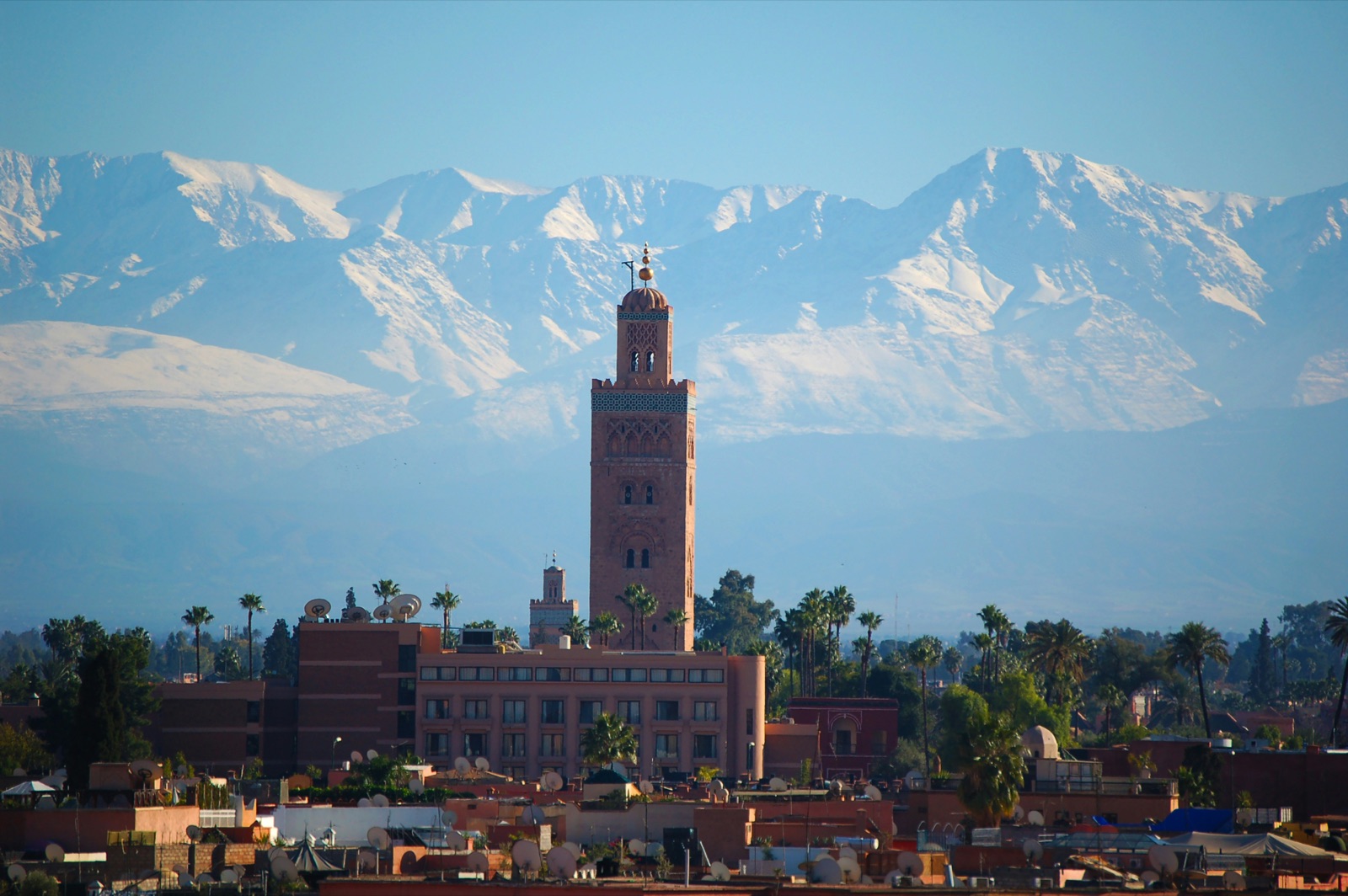
Marrakech is Morocco's tourist capital, centred on the nightly crowds of Jemaa el-Fnaa. Morocco's cannabis reputation comes from the north: the Rif mountains around Chefchaouen, where kif has been grown for generations and the UN ranks the country among the world's largest cannabis resin producers.
The single most important thing to know: recreational cannabis is a crime in Morocco, punishable by prison. The 2021 law that created a legal cannabis industry covers licensed farmers and pharmaceutical products — not tourists buying hash in the medina. Most hash offered to visitors in Marrakech comes with a second risk attached: the seller may be working with a fake police officer, or with real ones.
The Law Right Now
Drug offences are governed by Dahir No. 1-73-282 of 21 May 1974. Article 8 punishes using any narcotic, cannabis included, with 2 months to 1 year in prison and a fine of MAD 500 to 5,000 (roughly €45–€460). Prosecutors may suspend the case if the user agrees to detox treatment, but that option is rarely applied.
Article 2 covers anyone who unlawfully imports, produces, transports, exports or possesses narcotics: 5 to 10 years in prison and fines of MAD 5,000 to 500,000. Whether a case is charged as use or possession is the prosecutor's call. International drug trafficking is excluded from the alternative sentences (community service, electronic monitoring) introduced under Law 43-22 in August 2025.
Enforcement is heavy. The national police (DGSN) handled 106,117 drug cases and made 134,126 arrests in 2025, seizing nearly 171 tonnes of cannabis products. Drug offences have long been a leading cause of imprisonment in Morocco.
Law 13-21 (2021) legalised cannabis for medical, pharmaceutical and industrial use under the regulator ANRAC. Cultivation is limited to licensed farmers in Al Hoceima, Chefchaouen and Taounate; around 140 cannabis-based products have been approved for sale through licensed outlets. None of this permits recreational use.
Realistic Consequences
There is no fixed-fine system for tourists. A visitor found with a small amount faces police discretion: the drug is seized, and the outcome can range from a warning to arrest, detention and a court appearance under Article 8. Quantity, packaging, cash and behaviour decide whether it becomes an Article 2 possession or trafficking case, and at that point you are looking at years, not months. Being a foreigner earns no leniency. The UK Foreign Office warns that drug offences, cannabis included, carry lengthy jail sentences and heavy fines.
The more likely problem in Marrakech is extortion. A commonly reported pattern: a young man sells you hash in the medina, and minutes later a "plain-clothes officer" appears demanding MAD 2,000–5,000 to make it go away. Fake or real, you have just bought an illegal drug.
📡 Regulation Pulse
- 19 August 2024: King Mohammed VI pardoned 4,831 people convicted, prosecuted or wanted for cannabis cultivation, to push farmers into the legal system.
- 22 August 2025: Law 43-22 on alternative sentences took effect; international drug trafficking is excluded.
- 2025: ANRAC reported 5,765 active authorisations, over 5,300 licensed farmers and nearly 2,000 tonnes of legal dried cannabis produced.
- June 2026: officials cited around 140 approved cannabis-based products and 600+ authorised points of sale.
- June 2026: farmer advocates called for regulated recreational legalisation, saying over 90% of potential growers remain outside the legal system; there is no government bill.
Public Sentiment
In a survey of 1,054 adults for the Economic, Social and Environmental Council's 2020 annual report, about 80% of Moroccans said legalising cannabis for medical, cosmetic or industrial use would benefit society. Support for recreational use has not been measured the same way, and while kif smoking is openly visible in parts of the north, the state has shown no sign of loosening the 1974 law.
Practical Advice for Visitors
Do not buy hash in Jemaa el-Fnaa, the souks or from anyone who approaches you. Sellers are frequently part of a scam with a "police officer" who follows, and a real arrest is also possible.
Use licensed guides only. Official guides carry a visible badge; the unlicensed "faux guides" who latch onto tourists in the medina are a common route to drug offers and shakedowns.
Do not treat Chefchaouen as a legal zone. The Rif is where licensed medical cultivation happens, but buying or smoking as a visitor is illegal there too.
Never take cannabis on the ferry to Spain. Tanger Med and Algeciras make regular seizures; it is export under Moroccan Article 2 (5–10 years) and trafficking under Spanish Penal Code Art. 368 (1–3 years) on arrival.
Do not carry anything through Marrakech Menara Airport. The UK Foreign Office warns Moroccan airports use advanced detection equipment; never carry a bag or parcel for someone else.
If stopped, stay calm and ask for your embassy. Do not hand cash to a plain-clothes "officer" in an alley; real police will take you to a station.
Comments
Leave a Comment