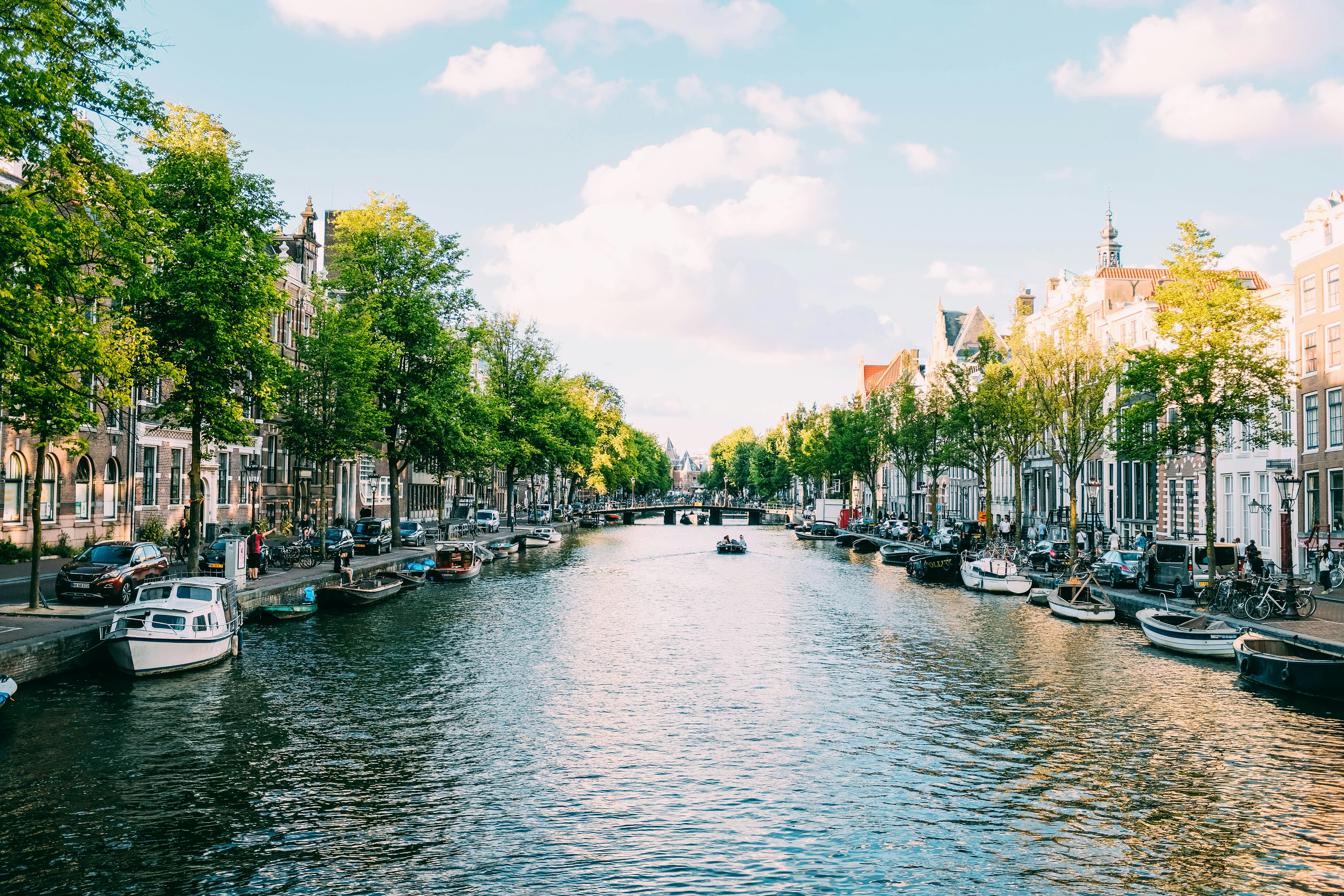
⚖️ Legal Status at a Glance — Amsterdam, Netherlands
Overview
Amsterdam's roughly 166 licensed coffeeshops remain one of the city's biggest tourist draws, and for over three years that access was politically up for grabs — proposed, dropped, and revived so many times that even locals stopped tracking it. A coalition agreement struck on 3 June 2026 finally settled the question: tourists can still walk into a coffeeshop and buy cannabis, full stop.
What visitors usually get wrong is treating that as "legal." It isn't — cannabis remains a controlled substance under Dutch law, and a 50-year-old policy of not prosecuting the sale protects it, not a change in the statute. That gap between "tolerated" and "legal" is exactly where tourists run into trouble: not at the coffeeshop counter, but on the street outside it.
The Law Right Now
Cannabis is regulated under the Opiumwet (Opium Act, 1976), where it sits on List II — the "soft drug" schedule, separate from the harder substances on List I. Under the gedoogbeleid (tolerance policy), prosecutors do not pursue coffeeshops that meet a fixed set of licensing conditions — no advertising, no hard drugs on the premises, no nuisance to neighbours, no sales to minors, and no transaction over the gram limit — even though the sale itself remains a technical offence.
The limit is 5 grams per person, per day, across every coffeeshop combined — not per shop. Buyers must be 18 or older and show a valid passport or national ID card; a driver's licence is frequently refused, and anyone who looks under 25 gets carded. Outside a coffeeshop, personal possession of up to 5 grams is tolerated in the same way — not legal, but not prosecuted — though police retain the right to confiscate it on the spot.
The city-specific fight in 2026 was over who gets to walk through the coffeeshop door at all. Amsterdam's municipal elections on 18 March 2026 returned a coalition of PRO Amsterdam (the merged PvdA and GroenLinks) and D66, and their governing agreement, published 3 June 2026, quietly dropped the residents-only ingezetenencriterium that PvdA itself had proposed back in October 2025. Every licensed coffeeshop stays open to non-Dutch visitors. The trade-off: the city's tourist tax rises from 12.5% to 16% in 2026, climbing roughly a point a year toward 20% — set to become the highest in Europe.
Beyond those thresholds, the Opiumwet is unforgiving: unlicensed sale, large-scale cultivation, and trafficking are criminal offences carrying up to 12 years' imprisonment and/or a fine, with a statutory uplift for repeat offenders. Prescription medical cannabis (the pharmacy-dispensed Bedrocan range, available since 2003) is not relevant to a typical visitor.
Realistic Consequences
Buy within the 5-gram daily limit from a licensed shop with ID in hand, and the realistic 2026 outcome is exactly what the transaction looks like: nothing happens beyond the purchase. That's genuinely different from every other city on this site, and it's why Amsterdam still pulls cannabis tourists specifically. The risk shifts almost entirely to two places: smoking outside the shop, and buying from anyone who isn't the shop.
Public smoking is where enforcement is real, not theoretical. It's meant to stay inside a coffeeshop's own seating area or a private address; plainclothes officers actively patrol the Red Light District and other tourist-dense streets, and the fine for lighting up outside is around €100, issued on the spot. The bigger trap is the informal seller near the Red Light District offering to sell directly — that's an illegal transaction entirely outside the tolerance system, the product is frequently not cannabis at all, and a buyer who comes back to complain has been reported walking into a staged robbery rather than a refund. There's also a structural quirk worth knowing about: coffeeshops are tolerated at the point of sale, but the cultivation that stocks most of their shelves is not — Dutch policy has never resolved that "backdoor problem," and Amsterdam's shops are excluded from the one national pilot designed to fix it.
📡 Regulation Pulse
- 18 March 2026: Amsterdam municipal elections — GroenLinks/PvdA (running as the merged PRO Amsterdam) wins, setting up the coalition talks that resolved the coffeeshop-tourist question.
- 3 June 2026: New coalition agreement (PRO Amsterdam + D66) permanently drops the residents-only ingezetenencriterium; tourist tax set to climb from 12.5% to 16% in 2026, then roughly 1 point/year toward 20%.
- 2026 (H1): Dutch Customs reports national cannabis seizures fell 62% year-on-year (20,923kg to 7,894kg), while air-freight and passenger-route cannabis seizures more than doubled (1,127kg to 2,059kg) — smugglers shifting toward aviation routes.
- Ongoing through 2026: the separate national "wietexperiment" regulated-supply pilot has expanded to roughly 70 coffeeshops across 10 other municipalities — Amsterdam is deliberately excluded, over concerns its tourist volume would overwhelm the licensed growers.
- 2026: the wietexperiment itself faces a renewed political threat, with CDA and ChristenUnie pushing to end it before its scheduled 2029 review of whether to take the regulated model nationwide.
Public Sentiment
The June 2026 outcome tracked what the coffeeshop industry and hospitality sector argued for years: survey data cited during the debate found roughly a quarter of foreign visitors would turn to street dealers if turned away at the door, undercutting the nuisance-reduction case for a ban. Opposition split by neighbourhood rather than ideology — residents in the most tourist-saturated Red Light District blocks were the strongest backers of restriction — and the coalition ultimately reached for a fiscal lever, the rising tourist tax, instead of a purchasing ban.
Practical Advice for Visitors
Buy only from a licensed coffeeshop, never from anyone approaching you on the street. Street "dealers" near the Red Light District are outside the tolerance system entirely, the product is often not cannabis, and there is no recourse if something goes wrong.
Carry a passport or national ID card — a driver's licence is frequently not accepted. You must be 18 or older, and anyone who looks under 25 will be carded before a sale.
Do not buy or carry more than 5 grams total in one day, across every coffeeshop combined. The limit is per person, per day — not per shop, and stacking purchases across multiple coffeeshops to get around it is not a loophole.
Smoke only inside a coffeeshop's own seating area or a private address. Lighting up on the street or in most other public spaces draws an actively enforced fine around €100 — plainclothes officers specifically patrol the Red Light District for this.
Do not carry cannabis across the Dutch border in either direction, including onward from Schiphol. The tolerance policy is a domestic prosecutorial choice, not an import or export allowance, and neither customs nor another country's police will honour it.
Budget for a rising tourist tax, not a cannabis ban. Accommodation tax climbs from 12.5% toward 20% over the current coalition's term — that was the trade-off for keeping coffeeshops open to visitors, not a fee on cannabis itself.
Comments
Leave a Comment