⚖️ Legal Status at a Glance — Bangkok & Pattaya, Thailand
Overview
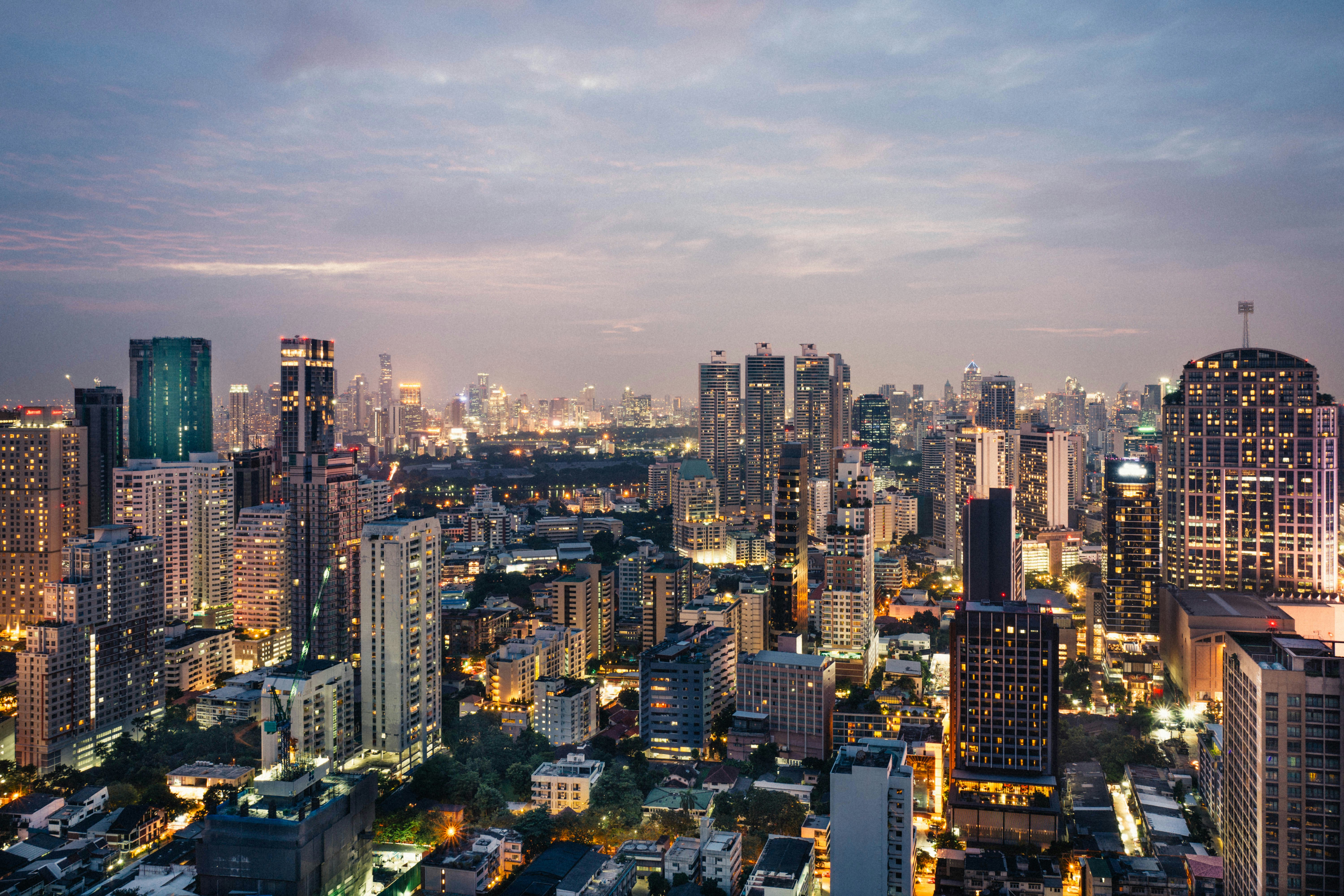
Bangkok is Thailand's capital and one of the most visited cities on earth, welcoming over 20 million international tourists in peak years. The open-air recreational cannabis market tourists heard about after Thailand's 2022 decriminalisation is not the market a visitor finds in 2026. A Ministry of Public Health notification reclassified cannabis flower as a "controlled herb" effective 26 June 2025, putting purchase and possession back under medical control. Hundreds of dispensaries across Sukhumvit, Silom, and Khao San Road remain standing, but the legal basis for walking in and buying has changed.
The gap between law and street reality is the story here: recreational purchase and possession are now criminal offences without a doctor's prescription, yet plenty of Bangkok shops keep serving tourists as if nothing changed, and Pattaya's own dense dispensary scene around Walking Street runs on the same gap.
The Law Right Now
Cannabis flower was removed from Thailand's Category 5 narcotics schedule on 9 June 2022, then reclassified as a "controlled herb" under a Ministry of Public Health notification effective 26 June 2025, issued under the Protection and Promotion of Thai Traditional Medicine Knowledge Act. That reclassification remains in force as of September 2026.
Who can legally buy: Only patients holding a valid PT33 prescription from a licensed medical practitioner, issued for one of five approved conditions since September 2025, valid for roughly 30 days and a specified quantity. Tourists need a genuine consultation and passport ID; there is no recreational purchase route. Violations of the controlled-herb rules carry up to 1 year in prison and a 20,000 THB fine.
Where cannabis can legally be sold: A Ministerial Regulation effective 1 May 2026 restricts premises to hospitals, pharmacies, licensed herbal retailers, and traditional-healer workplaces, each required to keep a DTAM-trained staff member on site during operating hours. Public Health Ministry data reported in February 2026 showed only 1,339 of 8,636 shops with expiring 2025 licences renewed — roughly 7,300 outlets have closed nationwide rather than meet the new standard.
Public smoking: Still prohibited across all public spaces — streets, parks, temples, markets, beaches, and public transport including the BTS Skytrain and MRT — regardless of prescription status. Fines reach 25,000 THB (approximately €650). The 100-metre exclusion zone around schools, temples, and government buildings, including Wat Pho and Wat Phra Kaew, is a separate and more serious offence.
Export from Thailand: Carrying cannabis out through Suvarnabhumi or Don Mueang airports is drug trafficking under Thai law, with penalties up to and including death for large quantities, regardless of how the cannabis was obtained.
Realistic Consequences
Enforcement of the medical-only rule in Bangkok is inconsistent. Reporting as recent as August 2026 found dispensaries near Sukhumvit still selling joints to walk-in tourists for a few hundred baht with no prescription check — the transaction looked exactly like 2023. At the same time, DTAM inspected 1,247 cannabis outlets nationwide by mid-2026 under June 2026 guidelines, suspending licences for incomplete records and revoking them for sales to minors or pregnant customers. The realistic risk is not that every purchase gets flagged — it is that the shop you bought from can be raided at any time, and a prescription-less transaction offers no cover if it is. Airport export is the sharper edge: in July 2026, a Belgian tourist was arrested at Phuket International Airport with 31.7kg of cannabis and a Russian national with over 17kg, part of what Thai authorities describe as thousands of airport interceptions over nine months, more than 60% UK-bound. The same screening applies at Suvarnabhumi and Don Mueang.
Pattaya adds a risk the statute books don't cover: shops sometimes enforce their own disputes. On 30 August 2026, a cannabis shop employee tracked a British tourist down on a central Pattaya street and punched and choked him, accusing him of using a forged bank transfer slip three weeks earlier to walk out with 29,200 THB of product; the assault was filmed and circulated online, and police opened separate investigations into the fraud and the attack without saying whether either side would be charged. Thai media counted it as at least the sixth cannabis-linked crime in the city in 2026, after an off-duty police lieutenant fatally shot a shop owner near Walking Street in April and a British cannabis-farm operator was stabbed to death in July. A payment dispute with a Pattaya dispensary does not necessarily stay a legal matter — it can just as easily become a physical one, with the shop doing its own enforcing.
📡 Regulation Pulse
- Cannabis flower reclassified as a "controlled herb" effective 26 June 2025, ending the 2022 recreational framework; unauthorised recreational possession is now a criminal offence.
- Since September 2025, medical purchase requires a doctor-issued PT33 prescription valid ~30 days, for one of five approved conditions.
- Ministerial Regulation (No. 2) B.E. 2569, effective 1 May 2026, confines cannabis sales to hospitals, pharmacies, licensed herbal retailers, and traditional-healer premises.
- Public Health Ministry (Feb 2026): only 1,339 of 8,636 shops with expiring 2025 licences renewed — roughly 7,300 outlets closed nationwide.
- The stalled legalisation bill was renamed the Cannabis Control Act; its completed draft went to the Public Health Minister on 20 July 2026, with Cabinet review next and parliamentary debate not expected before January 2027 — a rival, stricter bill was separately filed in Parliament on 9 July 2026.
Public Sentiment
Thailand's cannabis industry and agricultural stakeholders, many of whom invested heavily during the 2022–2025 boom, are strongly critical of the reclassification. Public health officials and conservative groups backed the tightening, citing a documented rise in cannabis-related poisoning cases. Public polling shows opinion split along the same lines as before — urban Bangkok and tourist-facing businesses more permissive in practice than the policy on paper, and rural and northern provinces more supportive of the crackdown.
Practical Advice for Visitors
Do not assume an open shop means a legal purchase. Recreational buying is a criminal offence without a PT33 prescription, even where a dispensary looks and operates exactly as it did before June 2025. An open door is not a legal opinion.
Never smoke in public. Streets, parks, temples, markets, and all public transport are prohibited regardless of prescription status. Public smoking fines reach 25,000 THB.
Observe the 100-metre temple and school rule. Bangkok's density of temples and government buildings makes this exclusion zone practically significant. Enforcement near major wats is real and consistent, and applies regardless of prescription status.
Pay a Pattaya dispensary in full, with genuine funds, or don't buy at all. A disputed or fraudulent payment has led shop staff to track down and confront customers in the street — a dispensary dispute is not guaranteed to stay a matter for the police.
Do not take cannabis through any Thai airport — under any circumstances. Suvarnabhumi and Don Mueang have intensified screening after multi-kilogram seizures from tourists in 2026. Exporting cannabis from Thailand is drug trafficking with penalties up to and including death for large quantities. Consume or discard all cannabis before reaching the airport.
Comments
Leave a Comment