⚖️ Legal Status at a Glance — Krabi, Thailand
Overview
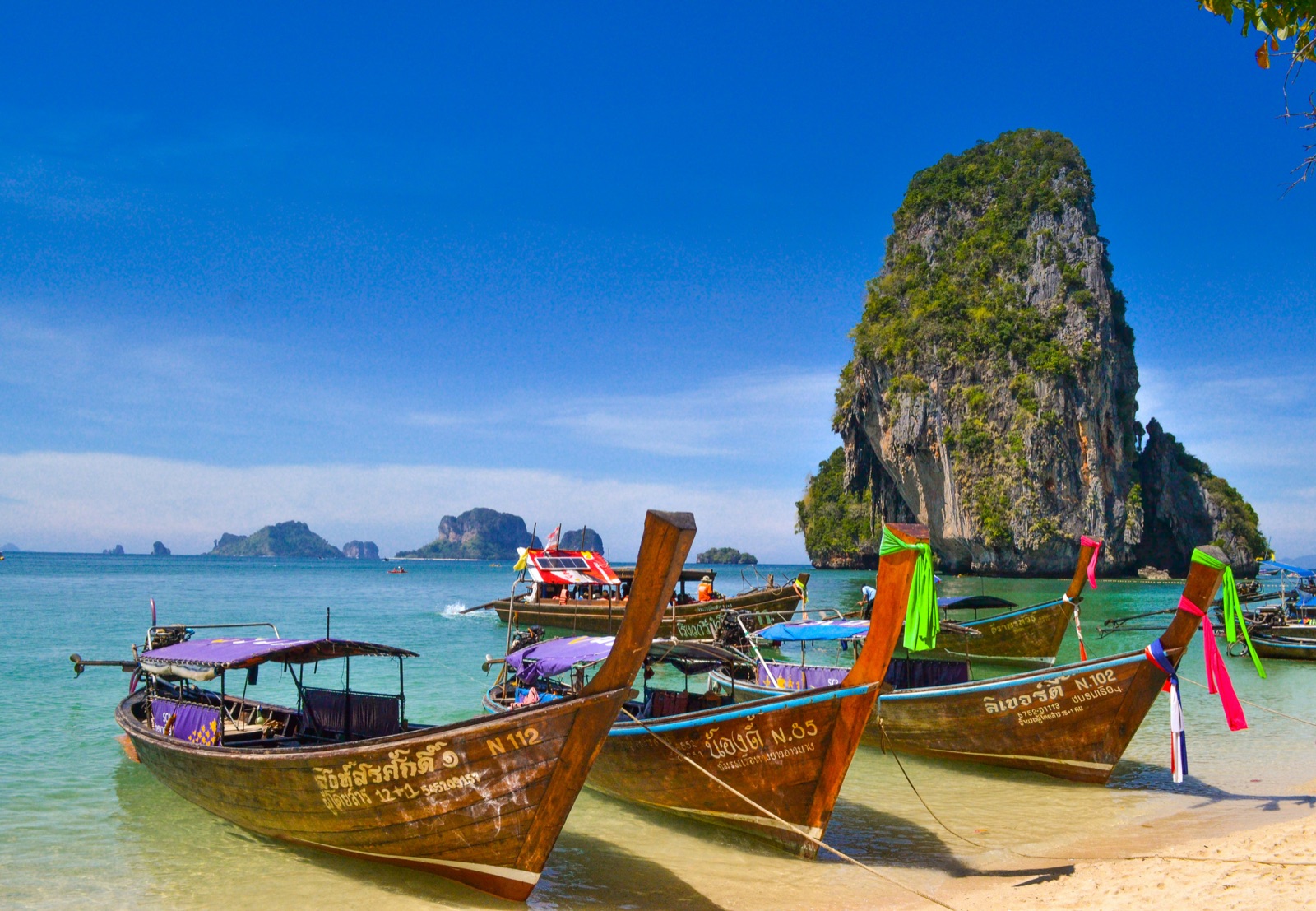
Krabi province is one of Thailand's main beach destinations: Ao Nang on the mainland, the climbing cliffs of Railay, the party bars of Koh Phi Phi and the quieter Koh Lanta. Cannabis shops were part of the Ao Nang strip after 2022, and many still display the leaf. That picture no longer reflects the law. Cannabis has been medical-only since 26 June 2025.
The most important point for visitors: an open shop does not make a purchase legal, and the serious risk in Krabi is not a joint in a bungalow but moving cannabis, through Krabi International Airport or south towards Malaysia, where drug trafficking can still carry the death penalty.
The Law Right Now
A Ministry of Public Health notification under the Protection and Promotion of Thai Traditional Medicine Knowledge Act B.E. 2542 reclassified cannabis flower as a "controlled herb" from 26 June 2025. Legal purchase requires a PT33 prescription from a licensed practitioner. Since September 2025 prescriptions are limited to five approved conditions, each valid for no more than 30 days. Violations of the controlled-herb rules carry up to 1 year in prison and a 20,000 THB fine. Since 1 May 2026, sales are restricted to hospitals, pharmacies, licensed herbal retailers and traditional healers.
Public smoking is banned on every beach, pier, boat and road, prescription or not. Fines go up to 25,000 THB. Cannabis extracts with more than 0.2% THC, including many edibles, vapes and oils, remain Category 5 narcotics under the Narcotics Code.
Krabi's 2026 enforcement has targeted foreign-run operations. On 21 January 2026, the provincial governor and police chief led a raid on an Israeli-run cannabis farm in Mueang Krabi that allegedly used Thai nominee shareholders and offered farm tours, on-site smoking and delivery to tourists; its licence was suspended for 60 days. On 14 March 2026, police raided an extract facility in the same district and arrested an Israeli man; lab tests found THC of up to 77%.
Realistic Consequences
A tourist with a gram or two of flower in a hotel room is not the main target, and small amounts are often dealt with by confiscation and a fine. Smoking openly on Ao Nang Beach, at a Phi Phi beach bar or on a longtail boat invites the 25,000 THB public-use fine. Customers can also be caught up in a raid if they are on the premises of a shop operating outside its licence. The risk rises sharply with quantity and with travel: on 8 March 2025, customs at Krabi airport arrested a British man boarding a flight to London with about 38kg in his suitcases, and the same night about 15kg was found abandoned in an airport restroom, apparently meant for a Singapore flight.
For foreigners, the bigger consequence is often immigration, not the fine. Under the Immigration Act B.E. 2522, drug convictions commonly lead to deportation and a ban on re-entering Thailand. A new Prime Minister's Office deportation regulation took effect in August 2026.
📡 Regulation Pulse
- 26 June 2025: cannabis flower reclassified as a controlled herb; a PT33 prescription is required from September 2025.
- 21 January 2026: raid on a foreign-run cannabis farm in Mueang Krabi offering tourist tours and on-site smoking; licence suspended.
- 14 March 2026: an Israeli man is arrested at a Krabi cannabis-extract facility producing oils with up to 77% THC.
- 26 April / 1 May 2026: new ministerial regulations tighten control of THC extracts and restrict where cannabis can be sold.
- 22 September 2026: the Cabinet approves a draft cannabis control bill limiting cannabis to medical use; shops will have to convert to medical facilities with a doctor on site to renew their three-year licences. The bill now goes to Parliament.
Public Sentiment
Krabi's tourism economy absorbed the 2022 cannabis boom, and shop signs in Ao Nang and on Phi Phi remain common. National policy has moved the other way: Bangkok treats unlicensed shops, foreign nominee businesses and smuggling as one enforcement problem, and the Public Health Minister has said inspections will focus on tourist areas.
Practical Advice for Visitors
Do not treat an Ao Nang shop as a legal source. Without a genuine PT33 prescription, buying is not legal, and a certificate sold at the counter gives no protection.
Never smoke on a beach, pier or boat. Ao Nang, Railay, Phi Phi and Koh Lanta beaches are public places, and the fine goes up to 25,000 THB.
Refuse edibles, vapes and oils of unknown strength. Anything above 0.2% THC is a Category 5 narcotic.
Carry nothing on ferries and speedboats. Boats to Phi Phi and Koh Lanta leave from public piers such as Klong Jilad, and consumption there counts as public use.
Do not take cannabis through Krabi International Airport. Exporting cannabis counts as smuggling and trafficking.
Do not take any cannabis towards Malaysia or Singapore. Under Malaysia's Dangerous Drugs Act 1952, 200g or more is presumed to be trafficking, punishable by death or 30 to 40 years in prison plus at least 12 strokes of the cane.
Related guides: Phuket · Koh Phangan · Koh Samui · Bangkok
Comments
Leave a Comment